3.6.5
Early Modern English
Test your knowledge with free interactive questions on Seneca — used by over 10 million students.
Early Modern English
Early Modern English refers to the period from around 1500 to 1800. The creation of the dictionary is of vital significance.

The British Navy
- As we move into this period, we see an age of British naval supremacy.
- As such, there are great deals of trade of products and words in this time.
- For example, many of our expletives come from interactions with Dutch sailors.

The Renaissance
- Beginning in the late 1500s, the Renaissance saw a ‘rebirth’ of Greek and Latin ideas in many different ways.
- Despite not being spoken or used anymore, Latin was still being taught in schools and so when the educated scholars were working in the Renaissance, there was an upsurge of Latin and Greek words into our language.

Arguments
- These words were being brought into our language by the educated, mostly for the purposes of science and medicine.
- There were arguments over the high number of Greek and Latinate terms entering our language and this is called ‘the Inkhorn Controversy’.
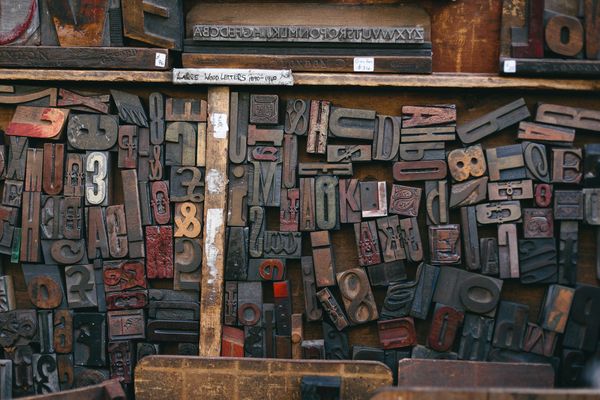
The Inkhorn Controversy
- This issue arose because, essentially, nobody had control over the English language.
- In addition, people in this century had need and desire for categorising things.
- As a result, we see the birth of the dictionary in this period.
D is for Dictionary (1 & 2)
Whilst there are many attempts to create a dictionary, these are the ones you should know about for your exam:

Dictionary number: 1
- Who wrote it? Richard Mulcaster
- Name: Elementarie.
- Year: 1582 (the very first attempt).
- Number of words: 8000.

Limitations
- Limitations: This often isn’t considered a dictionary by some linguists.
- Essentially, this was just a list of 8000 words – they were alphabetical, but had no definitions.
- Not very useful or precise – who gets to decide what goes in?

Dictionary number: 2
- Who wrote it? Robert Cawdrey.
- Name: A Table Alphabeticall.
- Year: 1604.
- Number of words: 2453.

Limitations and aims
- Limitations: Still a very small amount of words.
- Not designed for scholarly use.
- Aims: The main purpose of Cawdrey’s dictionary was to provide definitions and standardised spelling for the average person.
D is for Dictionary (3 & 4)
Whilst there are many attempts to create a dictionary, these are the ones you should know about for your exam:

Dictionary number: 3
- Who wrote it? Samuel Johnson.
- Name: Dictionary of the English Language.
- Year: 1755 (took 8 years to complete) note this is not part of the EModE period.
- Number of words: 40,000.

Limitations and aims
- Aims: Johnson was commissioned to write the dictionary by booksellers who were displeased with the state of spoken English.
- In his preface, Johnson notes that there is ‘perplexity to be disentangled, and confusion to be regulated’.
- Limitations: Johnson often used biased definitions in his book and didn’t include dialectal terms.

Key idea
- Although Johnson’s prescriptivist views were that we needed to regulate language and prevent change, he admits in the preface that doing this is like trying to ‘lash the wind’, essentially saying that it cannot be done.
- You can link this to ideas around standardisation.

Dictionary number: 4
- Who wrote it? James Murray (et al).
- Name: Oxford English Dictionary.
- Year: 1928 (49 years to complete) note this is not part of the EModE period.
- Number of words: Over 400,000 words.
- This dictionary continues to grow and expand and aims to catalogue as many words as possible.
1Language Levels
1.1Assessment Objectives
1.2Lexis
1.2.1Introduction1.2.2Common, Proper, Abstract & Concrete Nouns1.2.3Collective Nouns1.2.4Adjectives1.2.5Main, Auxiliary & Copular Verbs1.2.6Dynamic & Stative Verbs1.2.7Transitive, Intransitive, Active & Passive Verbs1.2.8Mood of Verbs1.2.9Adverbs1.2.10Personal, Possessive & Reflexive Pronouns1.2.11Relative & Demonstrative Pronouns1.2.12Determiners1.2.13Conjunctions1.2.14Synonyms, Antonyms & Phonological Features1.2.15End of Topic Test - Lexis
1.3Grammar
1.4Semantics & Pragmatics
1.5Discourse Structure, Graphology & Orthography
2Language, The Individual & Society
2.1Children’s Language Development
2.2Children's Language Development - Theories
2.3Literacy Development: Reading
3Language Diversity & Change
3.1The Importance of Gendered Language
3.2Social Groups
3.3Occupational Groups
3.4Accents & Dialects
3.5Language Change
Jump to other topics
1Language Levels
1.1Assessment Objectives
1.2Lexis
1.2.1Introduction1.2.2Common, Proper, Abstract & Concrete Nouns1.2.3Collective Nouns1.2.4Adjectives1.2.5Main, Auxiliary & Copular Verbs1.2.6Dynamic & Stative Verbs1.2.7Transitive, Intransitive, Active & Passive Verbs1.2.8Mood of Verbs1.2.9Adverbs1.2.10Personal, Possessive & Reflexive Pronouns1.2.11Relative & Demonstrative Pronouns1.2.12Determiners1.2.13Conjunctions1.2.14Synonyms, Antonyms & Phonological Features1.2.15End of Topic Test - Lexis
1.3Grammar
1.4Semantics & Pragmatics
1.5Discourse Structure, Graphology & Orthography
2Language, The Individual & Society
2.1Children’s Language Development
2.2Children's Language Development - Theories
2.3Literacy Development: Reading
3Language Diversity & Change
3.1The Importance of Gendered Language
3.2Social Groups
3.3Occupational Groups
3.4Accents & Dialects
3.5Language Change
Practice questions on Early Modern English
Can you answer these? Test yourself with free interactive practice on Seneca — used by over 10 million students.
- 1Dictionary number 1:True / false
- 2Dictionary number 2:True / false
- 3Limitations of Cawdrey’s dictionary:Fill in the list
- 4Dictionary number 3:True / false
- 5Who commissioned Johnson to write the dictionary?Multiple choice
Unlock your full potential with Seneca Premium
Unlimited access to 10,000+ open-ended exam questions
Mini-mock exams based on your study history
Unlock 800+ premium courses & e-books