2.1.6
Chapter 6
Test your knowledge with free interactive questions on Seneca — used by over 10 million students.
Chapter 6: Sherlock Gives a Demonstration
Knowing that the police are on their way, Holmes leaps into investigative action with Watson – he wants to examine the crime scene thoroughly before the incompetent police arrive.
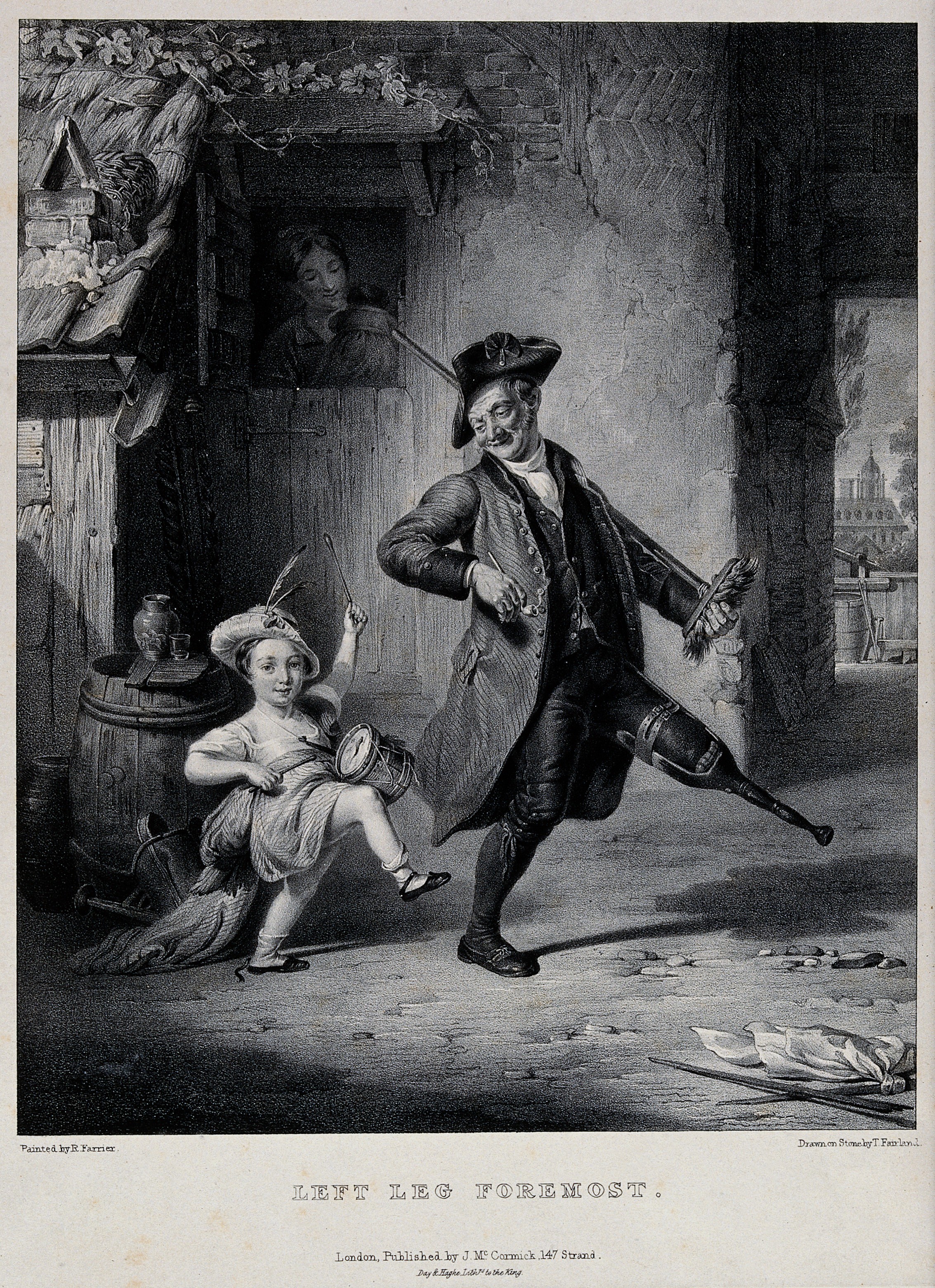
Holmes' conclusions
- From investigating the room, Holmes concludes that a wooden-legged man broke into the room and had an accomplice to help him escape.

Footprint
- Whilst examining the floor closely, they find a small footprint – Watson jumps to the conclusion that a child must have committed the murder.
- But Holmes whips out his magnifying glass and examines the floor more closely. He finds traces of creosote on the footprint and suggests that they could use a dog to follow the scent.

Arrival of Athelney Jones
- Inspector Athelney Jones enters the room, loud and wheezing, and interrupts the investigation.
- Jones’ first comment to Holmes is insulting. He calls him a ‘theorist’.
- Jones is shown to dismiss Holmes’ ideas and mock them, whilst jumping to a number of conclusions himself with no evidence: ‘Ha! I have a theory’.
- Ironically, it is Jones who is actually the theorist, who has no real evidence on which to base his ideas.
Jones' accusation
- Jones begins to state that Thaddeus must be guilty. Holmes tells Jones that he does not know all of the information yet.
- Holmes tells Jones about the poisonous thorn. Jones uses it to weave his own theory around how that proves Thaddeus’ guilt.
- He argues that Thaddeus has a house full of Indian curiosities, so could have used a foreign poisonous thorn to kill his brother.

Holmes accuses Jonathan Small
- Regardless of his lack of evidence, Jones decides to arrest Thaddeus Sholto.
- Holmes explains to Jones how Thaddeus could not have committed the crime:
- He names Jonathan Small as the criminal.
- Jonathan Small has a wooden-leg, and there is a mark of a wooden leg on the windowsill.
- He was a convict.
- He names Jonathan Small as the criminal.

Holmes' promise
- Holmes promises to reveal Jonathan Small and his accomplice to Inspector Jones as soon as he can. He then walks away, dismissing Jones.
- Holmes tells Watson to take Mary Morstan home and then to go and collect Toby (a dog).
Key Quotations for Chapter 6
Here are three key quotations for Chapter 6:
Holmes' investigation
- ‘My case is, as I have told you, almost complete (Sherlock Holmes).
- Holmes' use of the possessive pronoun, ‘my’, shows that he views this case as entirely his own piece of investigation – he does not even include Watson as a real intellectual partner.
- Alternatively, he could be using it to separate himself from the police force – he is possessive over his own ideas as his conclusions are based on factual evidence, unlike the police forces'.

Holmes' investigative methods
- ‘When you have eliminated the impossible, whatever remains, however improbable, must be the truth’ (Sherlock Holmes).
- Holmes tries to teach Watson about his investigative methods.
- He encourages Watson to draw his own conclusions, using the phrase ‘however improbable’ to encourage him to think outside the box.
- The italics suggest that Holmes is emphasising the need to carefully consider all of the evidence, even if it doesn’t seem to lead to the most logical conclusion.

Theorist Holmes
- ‘Theorist’ (Inspector Jones).
- By using the common noun ‘theorist’, Jones implies that Holmes has no real skill or investigative ability.
- He argues that Holmes just guesses his conclusions, with no solid evidence to base his ideas on.
- Ironically, it is Inspector Jones who gives wild theories with no actual evidence.
1Context
2Plot Summary
2.1Chapter Summaries
3Characters
3.1Key Characters
3.2Other Characters
3.3Grade 9 - Key Characters
4Key Themes
5Writing Techniques
6Recap: Main Quotes
6.1Characters Quotes
6.2Text Structure - Quotes
6.2.1Chapter 1 - Quotations6.2.2Chapter 2 - Quotations6.2.3Chapter 3 - Quotations6.2.4Chapter 4 - Quotations6.2.5Chapter 5 - Quotations6.2.6Chapter 6 - Quotations6.2.7Chapter 7 - Quotations6.2.8Chapter 8 - Quotations6.2.9Chapter 9 - Quotations6.2.10Chapter 10 - Quotations6.2.11Chapter 11 - Quotations6.2.12Chapter 12 - Quotations
Jump to other topics
1Context
2Plot Summary
2.1Chapter Summaries
3Characters
3.1Key Characters
3.2Other Characters
3.3Grade 9 - Key Characters
4Key Themes
5Writing Techniques
6Recap: Main Quotes
6.1Characters Quotes
6.2Text Structure - Quotes
6.2.1Chapter 1 - Quotations6.2.2Chapter 2 - Quotations6.2.3Chapter 3 - Quotations6.2.4Chapter 4 - Quotations6.2.5Chapter 5 - Quotations6.2.6Chapter 6 - Quotations6.2.7Chapter 7 - Quotations6.2.8Chapter 8 - Quotations6.2.9Chapter 9 - Quotations6.2.10Chapter 10 - Quotations6.2.11Chapter 11 - Quotations6.2.12Chapter 12 - Quotations
Practice questions on Chapter 6
Can you answer these? Test yourself with free interactive practice on Seneca — used by over 10 million students.
- 1
- 2Events of Chapter 6Put in order
- 3
- 4
- 5Who does Inspector Jones decide to arrest in Chapter 6?Multiple choice
Unlock your full potential with Seneca Premium
Unlimited access to 10,000+ open-ended exam questions
Mini-mock exams based on your study history
Unlock 800+ premium courses & e-books