11.3.3
Nationalism
Test your knowledge with free interactive questions on Seneca — used by over 10 million students.
Nationalism - 19th Century
Nationalism has played a role in the development of the modern world. Nationalism is the belief held by people belonging to a particular nation that their own interests are much more important than those of people belonging to other nations. In the 19th Century:

Colonial empires
- In the 19th century, European states (UK, France, Spain, Portugal, Belgium, the Netherlands, Italy and Germany) all established colonies overseas to create empires.
- Spain and Portugal dominated Latin America, with a lot of the rest of the world divided up among other colonial powers.

France, Spain & Portugal
- France acquired huge areas across north Africa. Cameroon, Mali and Senegal all speak the French language today.
- Spain and Portugal acquired huge areas of territory in South America.

Britain
- Britain’s empire included southern Africa and the Indian subcontinent (the British Raj describes the rule of India by the British crown).

Conflict between colonial powers
- Nationalism was a contributory factor in the conflict between the European powers.
- World War One was partly caused by the conflict between these colonial powers. Germany and Britain were engaged in a naval arms race and economic gain increased the tension between the nations.
Nationalism - Post WW2
Nationalism is the belief held by people belonging to a particular nation that their own interests are much more important than those of people belonging to other nations. After World War 2:
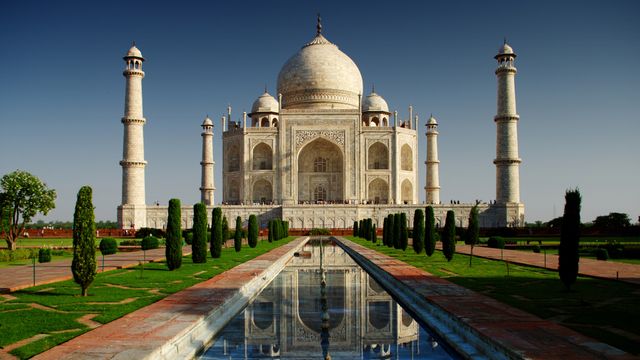
Independence movement
- After 1945 most former colonies gained their freedom and became independent and empires gradually disintegrated.
- India gained independence from Britain in 1947 and Kenya became independent in 1963.
- Habib Bourguiba led a Tunisian independence movement against France from 1952 to 1956.
- Latin American nations generally gained independence in the 1800s.

'Wind of change'
- There was a ‘wind of change’ across Africa. This was a period of rapid independence for many African nations.
- The high cost of the two world wars, resistance to foreign rule and concern about the injustice of colonial rule among young European people helped the independence movements.
- Rapid population growth and improved education systems in colonised nations helped to accelerate the movement.

Raw materials
- It could be argued that the European countries (the colonialists) became less dependent on the raw materials from their colonies, making them less attached.
The Post-Colonial Era - Outcomes
In many cases, the rapid de-colonisation led to a 'power vacuum' and a lack of economic stability.

Army control
- In many countries, the army seized power after independence.
- This happened in the Democratic Republic of Congo, Nigeria and Indonesia.

Ethnic groups
- In other nations, ethnic groups seized control.
- The Tutsi people in Rwanda seized control after independence. They had worked alongside the Belgian colonialists.
- When Kenyatta came to power in Kenya in the 1960s, he expelled many Kenyans of Asian origin.
- Resentment among persecuted or non-represented minority social groups sowed the seeds for future conflict.

Western interference
- During the Cold War, the USA, Russia (USSR) and other nations sometimes exacerbated post-colonial instability.
- They participated in proxy wars in Korea, Vietnam, Sudan and Yemen.
- These conflicts were often costly economically, environmentally and in human terms.

Migration to imperial countries
- Patterns of migration between former colonies and the imperial country have been strong e.g. from Jamaica, India and Uganda to the UK, Maghreb countries to France.
- These migration patterns have changed the ethnic composition and cultural diversity of the host/imperial country.
- Often these migrants may share a language/culture.
- Often, migrants were encouraged to fill jobs in textiles, transport and healthcare.
1Tectonic Processes & Hazards
1.1Tectonic Processes & Hazards
1.2Natural Disasters
1.3Natural Disaster Case Studies
1.4Trends & Patterns
2Option 2A: Glaciated Landscapes & Change
2.1Glaciated Landscapes Over Time
2.2Periglacial Landscapes
2.3Glacial Processes
2.4Glacial Landforms
3Option 2B: Coastal Landscapes & Change
3.1Coastal Landscapes
3.2Coastal Erosion & Deposition
3.3Coastal Risks
4Globalisation
4.1Globalisation
4.2Negatives of Globalisation
4.3Global Shift
4.5Culture
4.6Measuring Development
5Option 4A: Regenerating Places
5.1Types of Economies
5.2Function of Places
5.3Regeneration
5.4Regeneration Case Studies
6Option 4B: Diverse Places
6.1Population Structure
6.2Past & Present Connections
6.3Urban & Rural Spaces
6.4Diversity
6.5Urban & Rural Case Studies
6.6Case Study - Tower Hamlets
6.7Case Study - Sturton-le-Steeple
7The Water Cycle & Water Insecurity (A2 only)
7.1Hydrological Processes Global to Local
7.2Influences on the Water Cycle
7.3Water Insecurity
8The Carbon Cycle & Energy Security (A2 only)
8.1The Carbon Cycle
8.2Energy Consumption
8.3Alternative Energy
8.4Growing Demand for Resources
9Superpowers (A2 only)
9.1Superpowers
9.2Hard & Soft Power
9.3IGOs, TNCs & Alliances
10Option 8A: Health & Human Rights (A2 only)
10.1Human Development
10.2Role of Governments & IGOs
10.3Human Rights
10.4Interventions
11Option 8B: Migration & Identity (A2 only)
11.1Globalisation & Migration
11.2Consequences of Migration
11.3Nation States
11.4Responses to Global Migration
Jump to other topics
1Tectonic Processes & Hazards
1.1Tectonic Processes & Hazards
1.2Natural Disasters
1.3Natural Disaster Case Studies
1.4Trends & Patterns
2Option 2A: Glaciated Landscapes & Change
2.1Glaciated Landscapes Over Time
2.2Periglacial Landscapes
2.3Glacial Processes
2.4Glacial Landforms
3Option 2B: Coastal Landscapes & Change
3.1Coastal Landscapes
3.2Coastal Erosion & Deposition
3.3Coastal Risks
4Globalisation
4.1Globalisation
4.2Negatives of Globalisation
4.3Global Shift
4.5Culture
4.6Measuring Development
5Option 4A: Regenerating Places
5.1Types of Economies
5.2Function of Places
5.3Regeneration
5.4Regeneration Case Studies
6Option 4B: Diverse Places
6.1Population Structure
6.2Past & Present Connections
6.3Urban & Rural Spaces
6.4Diversity
6.5Urban & Rural Case Studies
6.6Case Study - Tower Hamlets
6.7Case Study - Sturton-le-Steeple
7The Water Cycle & Water Insecurity (A2 only)
7.1Hydrological Processes Global to Local
7.2Influences on the Water Cycle
7.3Water Insecurity
8The Carbon Cycle & Energy Security (A2 only)
8.1The Carbon Cycle
8.2Energy Consumption
8.3Alternative Energy
8.4Growing Demand for Resources
9Superpowers (A2 only)
9.1Superpowers
9.2Hard & Soft Power
9.3IGOs, TNCs & Alliances
10Option 8A: Health & Human Rights (A2 only)
10.1Human Development
10.2Role of Governments & IGOs
10.3Human Rights
10.4Interventions
11Option 8B: Migration & Identity (A2 only)
11.1Globalisation & Migration
11.2Consequences of Migration
11.3Nation States
11.4Responses to Global Migration
Practice questions on Nationalism
Can you answer these? Test yourself with free interactive practice on Seneca — used by over 10 million students.
- 1
- 2
- 3What was the rule of India by Britain called?Multiple choice
- 4
- 5
Unlock your full potential with Seneca Premium
Unlimited access to 10,000+ open-ended exam questions
Mini-mock exams based on your study history
Unlock 800+ premium courses & e-books