6.3.2
Perceptions of Rural Places
Test your knowledge with free interactive questions on Seneca — used by over 10 million students.
The Rural Idyll
Rural places are perceived differently by contrasting groups of people because of their lived experiences and their perceptions.

The rural idyll
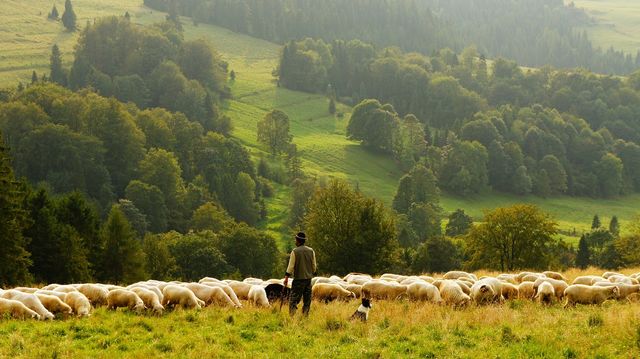
- Rural areas are often perceived as ‘ideal’ places to live – the ‘rural idyll’.
- Rural areas are often portrayed as having picturesque landscapes of rolling hills and woodlands.
- Many have historic buildings such as castles, old halls and village churches.
- Many have old, cottage-style housing with flower gardens.
- There is a relaxed pace of life (tranquillity), free from stress and worries, and a lack of crime.
- There is a strong sense of community, with activities like village cricket and socialising in a village pub.

The role of the media
- Portrayals of rural places in the media often reinforce the rural idyll.
- TV series (e.g. Emmerdale, Midsomer Murders) are set in attractive countryside, even if the ‘goings on’ there are frequently less idyllic.
- Rural places often brand themselves using literature to attract visitors
- E.g. (Thomas) Hardy Country in Dorchester (Dorset) and Bronte Country (West Yorkshire).
- E.g. Cornwall (Poldark), Highclere Castle, Hampshire and Bampton, Oxfordshire (Downton Abbey) and Alnwick Castle (Harry Potter).
Varying Perceptions of Rural Places
For some people, rural areas are not idyllic.

Lack of services
- Many homes are not connected to gas pipelines. They have expensive oil-fired boilers and central heating.
- Post offices, shops, petrol stations and banks are limited and more expensive to use in rural areas.
- Secondary schools and hospitals can be many miles away.
- Many houses are old, with high maintenance costs and high heating costs.
- In National Parks, conservation rules can restrict improvements such as double glazing.
- There are infrequent bus services making transport for the elderly more difficult.

Populations and employment
- Populations are ageing, which means there are limited social opportunities for children and young people and a feeling of isolation.
- Popular places can be swamped by summer tourists (honey-pot sites), but are deserted in winter with services closed for months. This means employment is highly seasonal.
Rural places are all different
- Rural places are all different.
- Some are more remote and very few people move there to live or retire.
- Some are more accessible. These are popular retirement locations as they are peaceful but near enough to services.
- Some coastal places are very popular with retirees.
- Many are commuter villages that are within one hour’s drive of a major city. These are popular locations for young families who commute daily to work or work from home.
1Tectonic Processes & Hazards
1.1Tectonic Processes & Hazards
1.2Natural Disasters
1.3Natural Disaster Case Studies
1.4Trends & Patterns
2Option 2A: Glaciated Landscapes & Change
2.1Glaciated Landscapes Over Time
2.2Periglacial Landscapes
2.3Glacial Processes
2.4Glacial Landforms
3Option 2B: Coastal Landscapes & Change
3.1Coastal Landscapes
3.2Coastal Erosion & Deposition
3.3Coastal Risks
4Globalisation
4.1Globalisation
4.2Negatives of Globalisation
4.3Global Shift
4.5Culture
4.6Measuring Development
5Option 4A: Regenerating Places
5.1Types of Economies
5.2Function of Places
5.3Regeneration
5.4Regeneration Case Studies
6Option 4B: Diverse Places
6.1Population Structure
6.2Past & Present Connections
6.3Urban & Rural Spaces
6.4Diversity
6.5Urban & Rural Case Studies
6.6Case Study - Tower Hamlets
6.7Case Study - Sturton-le-Steeple
7The Water Cycle & Water Insecurity (A2 only)
7.1Hydrological Processes Global to Local
7.2Influences on the Water Cycle
7.3Water Insecurity
8The Carbon Cycle & Energy Security (A2 only)
8.1The Carbon Cycle
8.2Energy Consumption
8.3Alternative Energy
8.4Growing Demand for Resources
9Superpowers (A2 only)
9.1Superpowers
9.2Hard & Soft Power
9.2.1Hard & Soft Power9.2.2Emerging Powers - China Rivalry9.2.3Emerging Powers - Chinese Sources of Power9.2.4Emerging Powers - Brazil9.2.5Emerging Powers - Russia9.2.6Emerging Powers - India9.2.7Theories of Development9.2.8Power Case Studies: Chinese One Belt One Road9.2.9Power Case Studies: Pakistan Nuclear Arms9.2.10Power Case Studies: OPEC
9.3IGOs, TNCs & Alliances
10Option 8A: Health & Human Rights (A2 only)
10.1Human Development
10.2Role of Governments & IGOs
10.3Human Rights
10.4Interventions
11Option 8B: Migration & Identity (A2 only)
11.1Globalisation & Migration
11.2Consequences of Migration
11.3Nation States
11.4Responses to Global Migration
Jump to other topics
1Tectonic Processes & Hazards
1.1Tectonic Processes & Hazards
1.2Natural Disasters
1.3Natural Disaster Case Studies
1.4Trends & Patterns
2Option 2A: Glaciated Landscapes & Change
2.1Glaciated Landscapes Over Time
2.2Periglacial Landscapes
2.3Glacial Processes
2.4Glacial Landforms
3Option 2B: Coastal Landscapes & Change
3.1Coastal Landscapes
3.2Coastal Erosion & Deposition
3.3Coastal Risks
4Globalisation
4.1Globalisation
4.2Negatives of Globalisation
4.3Global Shift
4.5Culture
4.6Measuring Development
5Option 4A: Regenerating Places
5.1Types of Economies
5.2Function of Places
5.3Regeneration
5.4Regeneration Case Studies
6Option 4B: Diverse Places
6.1Population Structure
6.2Past & Present Connections
6.3Urban & Rural Spaces
6.4Diversity
6.5Urban & Rural Case Studies
6.6Case Study - Tower Hamlets
6.7Case Study - Sturton-le-Steeple
7The Water Cycle & Water Insecurity (A2 only)
7.1Hydrological Processes Global to Local
7.2Influences on the Water Cycle
7.3Water Insecurity
8The Carbon Cycle & Energy Security (A2 only)
8.1The Carbon Cycle
8.2Energy Consumption
8.3Alternative Energy
8.4Growing Demand for Resources
9Superpowers (A2 only)
9.1Superpowers
9.2Hard & Soft Power
9.2.1Hard & Soft Power9.2.2Emerging Powers - China Rivalry9.2.3Emerging Powers - Chinese Sources of Power9.2.4Emerging Powers - Brazil9.2.5Emerging Powers - Russia9.2.6Emerging Powers - India9.2.7Theories of Development9.2.8Power Case Studies: Chinese One Belt One Road9.2.9Power Case Studies: Pakistan Nuclear Arms9.2.10Power Case Studies: OPEC
9.3IGOs, TNCs & Alliances
10Option 8A: Health & Human Rights (A2 only)
10.1Human Development
10.2Role of Governments & IGOs
10.3Human Rights
10.4Interventions
11Option 8B: Migration & Identity (A2 only)
11.1Globalisation & Migration
11.2Consequences of Migration
11.3Nation States
11.4Responses to Global Migration
Practice questions on Perceptions of Rural Places
Can you answer these? Test yourself with free interactive practice on Seneca — used by over 10 million students.
- 1
- 2
- 3
Unlock your full potential with Seneca Premium
Unlimited access to 10,000+ open-ended exam questions
Mini-mock exams based on your study history
Unlock 800+ premium courses & e-books